
Graphic Design for Business: What to Commission
Graphic Design for Business: Branding, Ads & Web Assets
Graphic design helps a business explain who it is and what it offers through typography, colour, imagery and layout. The work might be a brand identity, campaign graphics, website visuals or a defined combination. It does not have to include every possible asset. Before commissioning it, decide whom you need to reach, where each design will appear and what the audience needs to understand or do.
This guide explains the core elements of graphic design, the kinds of work a business can request, and how to prepare a brief and review the result. Design can make a message clearer, but it cannot by itself guarantee enquiries or sales.
What is graphic design?
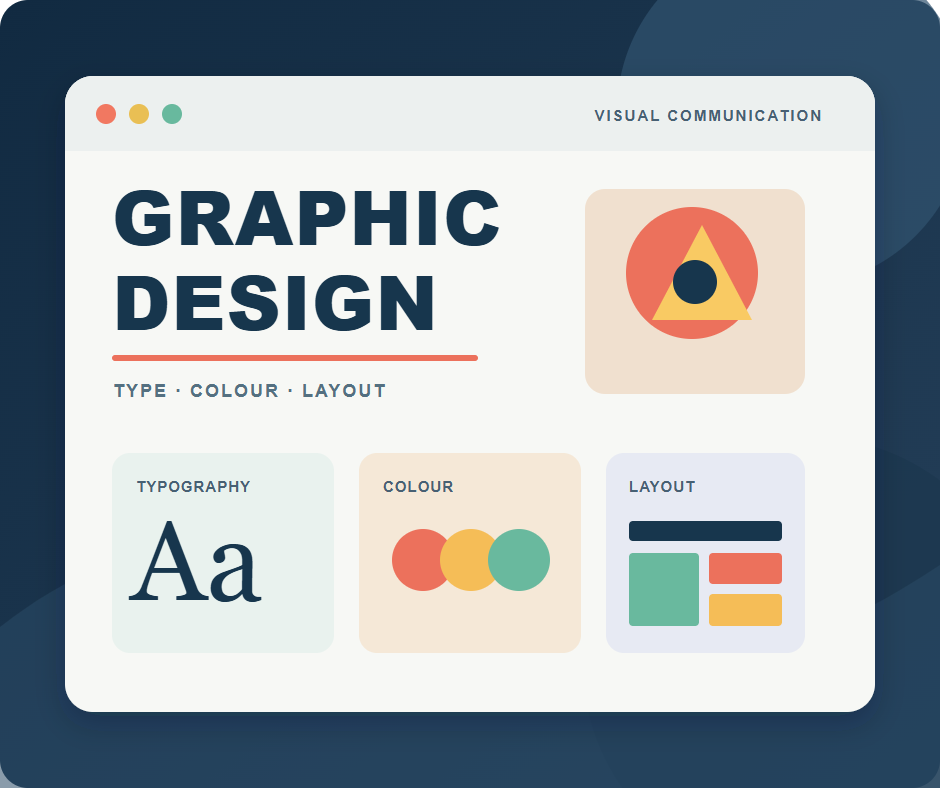
Graphic design is the arrangement of visual elements to communicate an idea. Images, illustration, text, colour, shapes and space work together so that a reader can recognise a message and understand its order of importance. The same principles can be applied to a logo, an advert, a brochure, a social post or a website asset.
It is broader than advertising or branding alone. A brand identity defines a visual system; graphic-design production applies that system to particular materials. Interactive navigation, forms and product journeys need additional UI/UX design decisions about how people use a website or app.
The essential elements of graphic design
Each design element has a practical role; the choice should follow the message and where the finished work will be used.
- Typography: choose typefaces, sizes, spacing and hierarchy that make text readable and distinguish headings from supporting detail.
- Colour: use a deliberate palette to group information and express the intended visual identity. For digital text, check contrast in the actual design rather than relying on appearance alone.
- Images and graphics: select photographs, illustrations or diagrams that support the message. Agree who supplies them and what usage rights are needed.
- Layout: arrange elements with balance, alignment and useful space so the reader can follow the content.
- Logos and branding: develop or apply a recognisable mark and visual rules across the agreed materials.
- Shapes and symbols: guide attention or simplify information without relying on colour alone to convey meaning.
- Text and titles: make the main message clear, with supporting copy sized and placed for its channel.
- Visual effects: use shadows, gradients or dimensional effects when they serve the content, rather than adding them to every asset.
Which deliverables does your business need?
A designer may create many kinds of work. Choose the outputs that match your current channels and agree their scope before work starts:
- Brand identity: a logo family, colour and typography direction, image treatment and usage guidance. See Web Landscape's branding and graphic-design service for how strategy, identity and production are scoped separately.
- Campaign and advertising graphics: images, logos and layouts for agreed placements. The platform and placement determine the formats and dimensions to prepare; for example, Google publishes asset requirements for responsive display ads. Campaign planning and management are a separate paid-advertising service.
- Website and social assets: banners, illustrations, icons, diagrams and reusable post templates. A website's interactive controls and journeys should be reviewed with its UI/UX scope.
- Print and packaging: brochures, posters, labels or packaging layouts, prepared to the printer's supplied specification where included in the brief.
- Other specialist work: animation, infographics and data visualisation when the message and delivery channel call for them.
These are examples, not a promise that every deliverable is included in one project. Photography, stock imagery, fonts, printing and specialist production may require separate licences or budgets.

How to write a useful design brief
Start with the business and audience rather than a list of styles. Explain what you offer, whom each asset is for and where it will appear. Then provide the materials and constraints a designer needs to make informed choices:
- Purpose and audience: identify the message, intended audience and action or understanding each piece should support.
- Applications: list the priority channels, placements, sizes, languages and whether the work is for screen, print or both.
- Existing material: share approved logos, brand rules, copy, images and examples of what must be retained or avoided.
- Deliverables: agree source files, export formats, colour requirements, usage guidance and any third-party asset licences.
- Decisions: name the reviewers, approval stages, feedback process and number of revision rounds.
If you do not know the exact outputs yet, say which applications matter first. The initial conversation can then define a realistic scope instead of assuming that every possible asset is required.
How to review the design before handover
Review whether the work communicates the agreed message in its real setting. Check consistency across the selected assets, legibility at the sizes people will see, and whether important information remains clear on mobile or in print. For digital text, WCAG's contrast criterion provides a measurable standard, with different thresholds and exceptions by context. A design should be tested against the applicable requirement rather than described as accessible on appearance alone.
Confirm that the final exports match the agreed placements and that the handover includes the files and usage notes specified in the brief. If the work is going onto a website or app, check the implemented version separately: a static graphic cannot validate navigation, responsive states or form usability.

For aspiring designers: five ways to develop your practice
If you are learning graphic design, consider these habits alongside project work:
- Take a structured course to practise design principles and learn how to explain your choices.
- Read experienced designers' work to compare approaches to typography, layout and visual problem-solving.
- Join a constructive peer group where you can share work and receive specific critique.
- Explore several disciplines before specialising in an area such as identity, editorial design or advertising.
- Review against the brief before delivery and invite another person to check the work where possible.
Discuss a scoped graphic-design project
Planning a brand refresh or a set of campaign and web assets? Share your audience, priority channels and the materials you need. Web Landscape can then discuss a defined brief, review stages and handover formats. Contact Web Landscape to discuss the brief, or first review the branding and graphic-design service.
